Elizabeth McPhee
Atmospheric fiction of Italy, memory, secrets, and the lives people try to keep hidden.
Elizabeth McPhee writes novels set in northern Italy, where beauty is never only beautiful, houses remember more than their owners know, and the past continues to shape the present long after everyone has agreed not to mention it.
Her fiction moves through old villages, family histories, religious concealments, vineyards, archives, houses, objects, and the social arrangements that protect certain stories while burying others. Some of her books enter darker psychological territory. Others offer the pleasures of an Italian village mystery: recurring characters, food, wine, conversation, local memory, and the gradual disclosure of what a place has learned to hide.
The Valdoro Mysteries
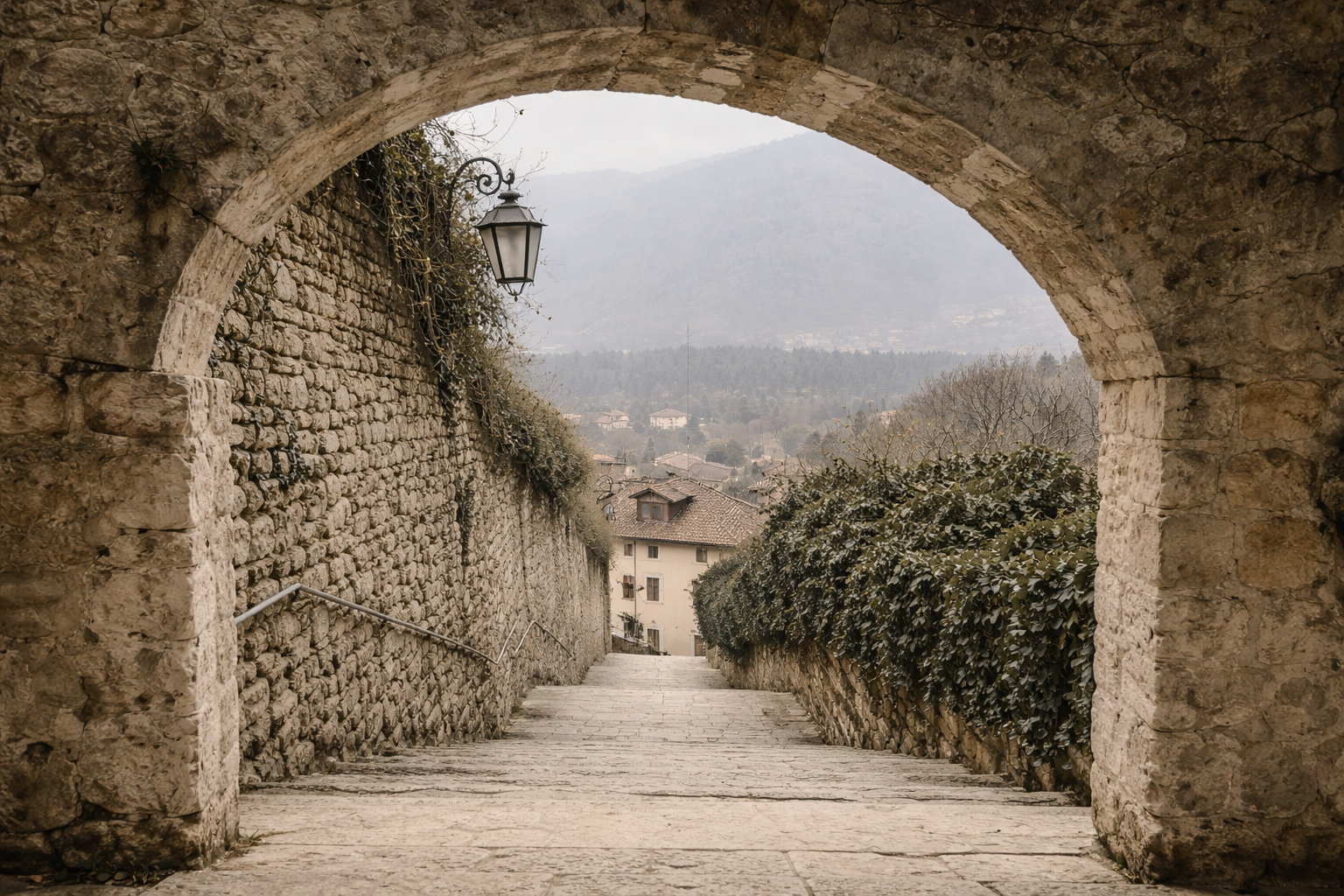
The Valdoro Mysteries are set in a fictional village in the Prosecco hills of the Veneto, in northeastern Italy, where the vineyards climb the slopes in disciplined rows and the families who tend them have been there for generations.
Alice Marlowe, an American widow and former cultural attaché, inherits a house on the upper edge of the village from a great-aunt she barely knew. She comes to Valdoro to write, to grieve, and to find out whether a life can be rebuilt in a place where she knows no one and no one knows her. She stays because the village will not let her leave. It needs her, though it will be a long time before anyone admits this.
Each book in the series follows a self-contained mystery set in and around Valdoro, solved through Alice’s particular combination of warmth, professional knowledge, and the outsider’s gift for seeing what the village has agreed not to look at. Running beneath the individual mysteries is a deeper thread: the story of Alice’s great-aunt Lucia, who did something brave and unacknowledged during the Second World War, and whose secret will take Alice five books to fully uncover.
The series is about mysteries, but it is also about belonging. About food and wine and the daily rhythms of a place where the bar opens at seven, the bread arrives from the bakery next door, and the man behind the counter knows your name before you tell him. About the difference between being welcomed and being accepted, and the years of patience required to cross from one to the other. About a woman in her fifties who discovers that starting over is not the same as starting from nothing, and that the life she builds in Valdoro may be the life she was always meant to live.
Why Did Maria Go to Paris?
A novel of psychological suspense set in the Prosecco hills, Paris, and Venice.
At forty-eight, Maria agrees to a discreet errand. She tells herself it is small. It isn’t. What she has agreed to do draws her into crimes older than she is, rooted in the world she came from: buried shame, religious concealment, and a family history that has never stayed in the past.
For readers drawn to psychological suspense, European settings, maternal secrecy, old crimes, and the emotional force of what families refuse to say.
Fiction shaped by place
Elizabeth McPhee’s novels are rooted in the atmosphere of lived places rather than postcard settings. The Prosecco hills, Venice, Paris, village bars, old houses, archives, churches, vineyards, and family tables are not backdrops. They are social worlds. They hold memory, reputation, hierarchy, longing, concealment, and danger.
In these stories, the past rarely announces itself directly. It appears through an omission, an object, a phrase, a room no one explains, a document that preserves the wrong truth, or a person whose grief does not look the way others expect it to look.