Why Did Maria Go to Paris?
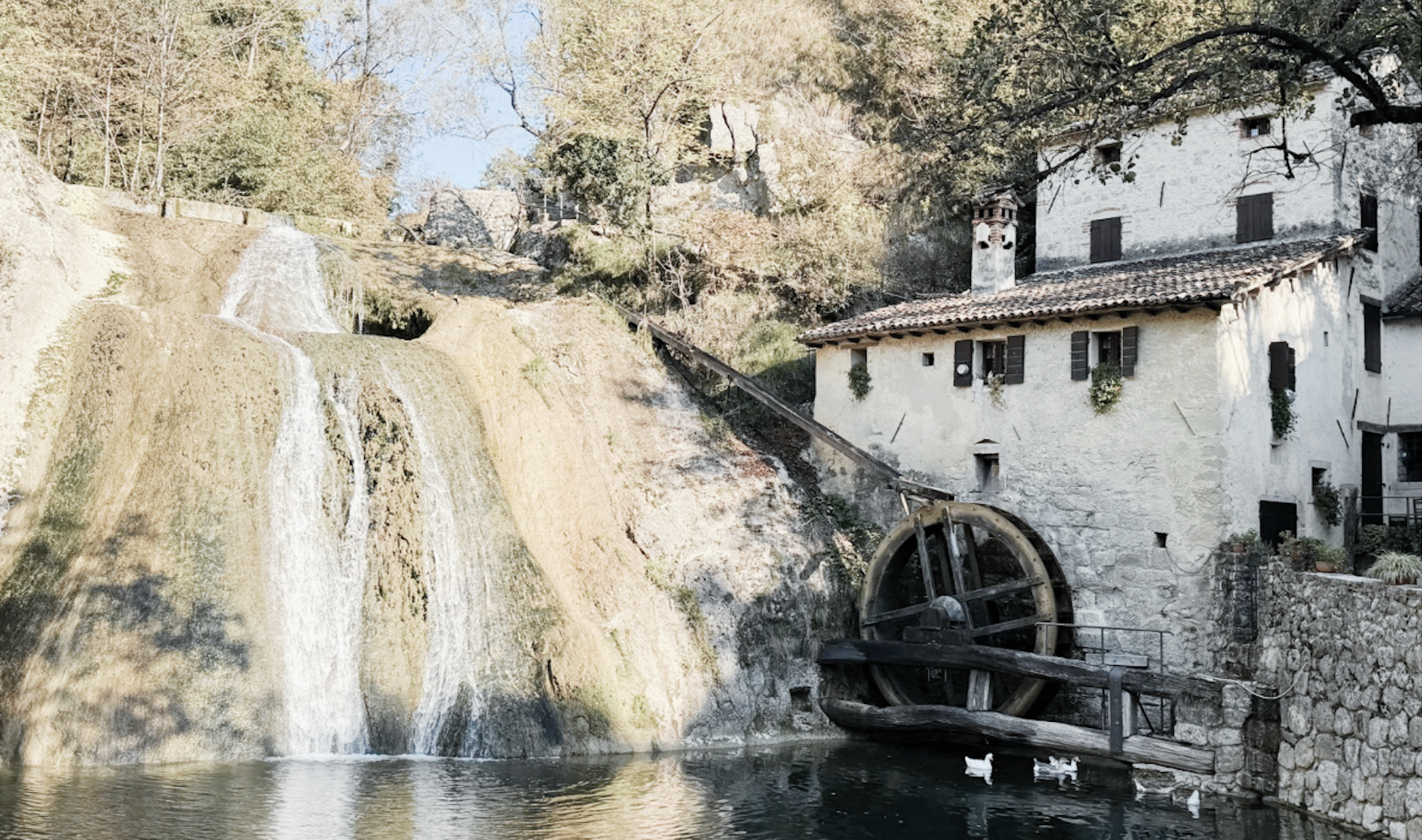
Maria has lived all forty-eight years of her life on her family’s vineyard in Refrontolo, in Italy’s Prosecco hills.
From the road, the land looks beautiful: vines climbing the slopes, stone houses folded into the hills, church bells carrying across the valley, the old mill path beside the water, the apricot tree at the upper edge of the property. It is the kind of place visitors notice for its beauty and leave before they understand its silences.
Maria has never left.
The village knows her as a woman apart: unmarried, severe, watchful, shaped by vineyard work, household duty, and the authority of a mother who has ruled the house for decades. She lives inside the rhythms of ordinary northern Italian village life: Mass, market errands, neighbors watching from windows, women who know the history of every family, men who remember land boundaries, and conversations in which what is not said often matters most.
What no one knows is that Maria’s life has been organized around a question no one has ever answered. When she was nine, she found her father dead in the vines, the hoe beside him at the wrong angle, her mother standing still for one second too long before she ran toward him.
That second has never left her.
After her father’s death, the vineyard became Maria’s inheritance and her enclosure. She remained beside the vines, outside the ordinary intimacies of village life, holding herself together through the belief that her father had seen something in her that no one else could see. Then, during her mother’s final illness, one sentence destroys the last foundation of that belief.
Maria does something from which there is no return.
Soon afterward, two men contact her. They have seen something in the vines. They know enough to frighten her, but they also speak to her as no one ever has: as someone capable, discreet, useful, and chosen. They ask her to carry a packet to Paris.
Maria goes.
What begins as a secret errand becomes the first act in a larger design involving a stolen object, a second delivery to Venice, a man whose concern conceals an older crime, and the buried history of a family whose secrets have never stayed buried.
Set in the Prosecco hills, Paris, Venice, and the hidden interiors of village life, Why Did Maria Go to Paris? is a novel of psychological suspense about secrecy, coercion, female isolation, and the terrifying power of being seen by the wrong people at the wrong time.
It asks what happens when a woman who has spent her life outside the world is invited, at last, into importance, and discovers too late that she has mistaken use for recognition.
Unlike The Valdoro Mysteries, which invite readers back into the recurring life of a fictional village, Why Did Maria Go to Paris? enters one woman’s world as it narrows around her.
Both belong to Elizabeth McPhee’s Italy: the Prosecco hills, family histories, old houses, hidden crimes, and the pressure of what people refuse to say. But where Valdoro offers the pleasures of return, recurring characters, village comedy, food, wine, and mysteries solved in community, Maria’s story moves inward. It follows a woman who has lived too long inside silence, duty, suspicion, and the beautiful confinement of land that has become both inheritance and prison.
If Valdoro is a village readers can enter again and again, Maria’s vineyard is a place readers enter once and do not leave unchanged.
Why Did Maria Go to Paris? is a literary psychological suspense novel about secrecy, coercion, and the slow exposure of a life built around concealment. For readers drawn to Patricia Highsmith’s moral unease, Elena Ferrante’s family intensity, and Claire Fuller’s atmosphere of buried danger.